
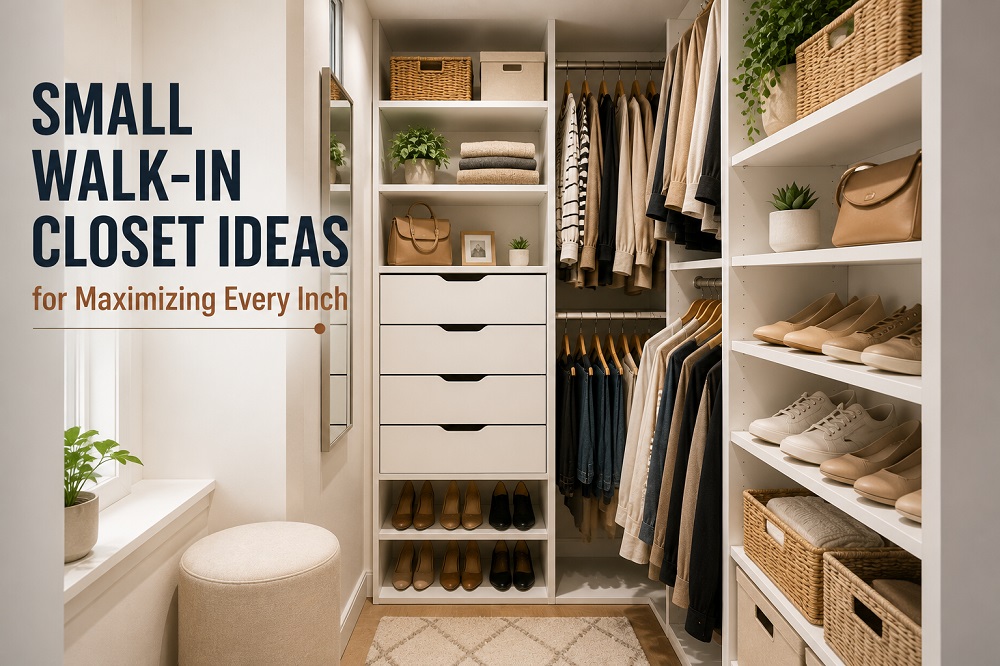
A walk-in closet sounds like a luxury until you actually try to fit clothes, shoes, and everything else into one that barely gives you room to turn around. Small walk-in closets are more common than people expect, especially in older homes, condos, and starter houses where builders carved out just enough space to call it a walk-in without really planning for storage. The good news is that a tight footprint does not have to mean a disorganized, frustrating closet. With the right layout and a few modular storage components, even a modest space can hold everything you need and look good doing it.
This guide walks through practical small walk-in closet ideas that work regardless of which brand or retailer you shop at. You will learn how to measure and plan before you buy, which types of modular systems work best for different closet shapes, and how to add finishing touches that make the space feel finished rather than makeshift. Whether your closet is four feet deep or shaped like an awkward L, there is a workable plan here.
Why Modular Storage Systems Work So Well For Small Walk-In Closets
Modular closet systems, built from adjustable frames and interchangeable interior fittings, are especially well suited to small walk-in closets because they can be customized to fit an exact set of dimensions. Instead of buying a single fixed unit that may not fit your space, you can combine narrow frames, shallow shelves, and adjustable rods to match the specific shape of your closet. This flexibility is a major reason modular systems have become a popular choice for closet organization, especially among renters and homeowners who do not want to commit to a custom-built system.
Beyond flexibility, the price point matters too. A custom closet company might charge several thousand dollars for a small walk-in redesign, while a modular, ready-to-assemble system can often be put together for a few hundred dollars depending on how many components you choose. For homeowners trying to get more function out of an underused space without a major renovation budget, this combination of adaptability and affordability is hard to beat.
Measuring And Planning Before You Shop
Take Precise Measurements Of Every Wall
Before shopping for any closet system, measure the width, depth, and height of every wall in your closet, including any awkward angles or obstructions like light switches or vents. Small walk-in closets often have unusual proportions, so accurate measurements prevent the frustration of ordering components that do not fit.
Sketch Your Layout Before Buying Anything
Many closet retailers offer online planning tools that let you input your dimensions and experiment with different frame widths and depths before making a purchase. Even a simple hand-drawn sketch with measurements noted can prevent costly mistakes, which matters most in small spaces where even a few inches determine whether a plan works.
Decide Between Sliding Doors And An Open Layout
In a small walk-in closet, swinging doors on cabinets can eat up valuable floor space needed for movement. Many homeowners opt for an open shelving layout without doors, or choose sliding door panels, both of which preserve more usable floor area than traditional hinged doors.
Small Walk-In Closet Ideas Using Modular Wardrobe Frames
Choose Shallow Depth Frames For Narrow Closets
Most modular wardrobe frame systems come in multiple depth options, and the shallower depth is often the better choice for small walk-in closets since it leaves more room to move around inside the space. A shallower frame still comfortably holds folded clothing, shoes, and accessories with the right interior fittings.
Mix Hanging Space With Shelving
Rather than filling an entire wall with hanging rods, mixing a shorter hanging section with adjustable shelving above and below makes better use of vertical space. This layout works particularly well for closets that hold a mix of dresses, folded sweaters, and shoe storage.
Add Pull-Out Trouser And Skirt Hangers
Pull-out hangers designed specifically for trousers or skirts keep these items wrinkle-free while taking up less horizontal space than a standard rod, which matters in a closet where every inch counts.
Maximizing Vertical Space In A Small Walk-In Closet
Install Shelving All The Way To The Ceiling
Small walk-in closets often have unused space near the ceiling that gets overlooked. Extending shelving to the full height of the closet and reserving the top shelves for seasonal items or rarely used bags keeps frequently used items within easy reach while still capturing every bit of storage potential.
Use Stackable Storage Boxes For Small Items
Fabric or clear plastic boxes designed to stack within a modular shelving system are ideal for small items like scarves, belts, or jewelry that would otherwise clutter shelves. Labeling each box makes it easy to find things quickly, which matters in a closet too small for extensive searching.
Add A Pull-Down Rod For High Hanging Sections
For closets with tall ceilings but limited floor space, a pull-down closet rod mounted near the top allows you to use vertical space for hanging clothes that would otherwise be out of reach, effectively doubling the usable hanging area in a narrow footprint.
Small Walk-In Closet Ideas For Shoes And Accessories
Use Angled Shoe Shelves
Angled shoe shelves display shoes at a slight tilt, which uses less depth than flat shelving while still keeping pairs visible and easy to grab. This is especially useful in closets too narrow for a traditional shoe rack.
Add A Slim Drawer Unit For Accessories
A narrow drawer unit tucked into an unused corner or gap keeps accessories like watches, sunglasses, and small bags organized without taking up hanging or shelf space needed for clothing.
Mount Hooks On The Back Of The Closet Door
If your small walk-in closet has a door rather than an open entry, the back of that door is often wasted space. Adding a row of hooks or a slim over-door organizer provides extra storage for bags, scarves, or robes without using any additional floor or wall space inside the closet.
Lighting And Finishing Touches For A Small Walk-In Closet
Add Battery-Operated LED Puck Lights
Many small walk-in closets, especially in older homes, were not built with dedicated lighting. Battery-operated LED puck lights, often sold in multi-packs for twenty to thirty dollars, can be mounted under shelves or along the ceiling without any electrical work, making it much easier to see items stored in the back of the closet.
Use A Full-Length Mirror To Add Depth
A full-length mirror mounted on the inside of a closet door or on an open wall not only helps with getting dressed but also visually expands the perceived size of a small space, since it reflects light and creates the illusion of depth.
Keep A Consistent Color Palette
Choosing white or light-colored storage boxes, shelves, and hangers throughout the closet creates a cohesive, calm look that makes a small space feel more organized and less cluttered, even when it is holding a full wardrobe.
Frequently Asked Questions
What is the best type of storage system for a small walk-in closet? A modular wardrobe frame system paired with adjustable interior fittings is generally the best option for a small walk-in closet, since shallow depth frames and customizable shelving adapt easily to tight or irregular spaces.
How much does a modular closet system cost for a small walk-in closet? A modular closet system for a small walk-in closet typically costs between two hundred and six hundred dollars depending on the number of frames, shelves, drawers, and accessories chosen, which is significantly less than most custom closet installations.
Can I install a modular closet system myself? Yes, most modular closet systems are designed for home assembly with basic tools, and many come with detailed instructions or online planning guides, though closets with unusual angles or obstructions may benefit from careful measuring before ordering.
How do I maximize storage in a very small walk-in closet? Maximizing storage in a very small walk-in closet usually involves extending shelving to the ceiling, using angled shoe shelves, adding door-back hooks, and choosing shallow depth units that preserve floor space for movement.
Do I need an electrician to add lighting to a small closet? No, battery-operated LED puck lights provide effective closet lighting without any wiring or electrical work, making them a practical solution for closets that were not built with dedicated lighting.
Bringing Your Small Walk-In Closet Ideas To Life
A small walk-in closet does not have to feel like a missed opportunity. With careful measuring, the right combination of modular wardrobe frames and interior fittings, and a few smart finishing touches like lighting and a mirror, even the tightest closet can become a genuinely functional, well-organized part of your home. Start by measuring your space and sketching out a rough layout, then use a planning tool or a simple diagram to fine-tune the details before you buy.
Set aside a weekend to measure, plan, and place your order, and block out a second weekend for assembly and organizing. A small walk-in closet, done right, can hold more than you would expect and make your morning routine noticeably easier.